

LE CIEL JOURNAL · THOUGHTFUL STAYS
Rental bathroom improvements are often felt before they are admired. A guest arriving after a long journey wants a clear place for a wash bag, a towel within reach and a shower that behaves as expected. Those small details make the room feel cared for. An expensive fitting cannot compensate for a leaking tap or nowhere to hang wet towels.
For an owner, a refresh should improve daily use and the team’s ability to maintain the room. Begin with the actual guest journey, then choose a modest set of changes you can deliver reliably. The aim is a bathroom that works comfortably between bookings, with a finish that remains pleasant after repeated cleaning.
Start rental bathroom improvements with a use test
Walk through an ordinary morning
Put a wash bag beside the basin. Find somewhere dry for clothes, use the mirror and reach for a towel. Open the shower screen and check whether it obstructs anything. Notice where a guest has to balance belongings or stretch awkwardly. Record observations rather than shopping immediately.
Then ask the person who cleans the room to repeat the walk-through. A narrow gap behind furniture may look neat but be difficult to reach. Decorative containers may need constant handling. Their experience can reveal work that an owner visiting briefly would miss.
- Is there a dry, usable surface for everyday toiletries?
- Can towels hang separately instead of remaining in a damp pile?
- Are switches and controls easy to identify?
- Can the team reach the areas that need regular cleaning?
- Do doors and drawers open without awkward collisions?

Repair faults before choosing finishes
Separate repair needs from appearance. Drips, loose fittings, cracked surfaces and drainage concerns need investigation before new accessories. Describe each problem to an appropriate qualified professional. A quick visual check does not establish the safety or condition of plumbing, electrical work or waterproofing.
For example, replacing a vanity while ignoring a recurring leak may damage the new cabinet. Ask what caused the problem, what work is proposed and how the result will be checked. Keep the repair record and any product instructions with your rental maintenance plan.
Give moisture a practical place in the brief
Check whether ventilation actually removes moisture, rather than assuming a fan is effective because it makes noise. The US EPA’s bathroom renovation guidance explains that bathroom exhaust should discharge outdoors. Use this as general moisture guidance, not as a substitute for Indonesian requirements or the building’s approvals.
Ask your contractor to assess the existing setup and any constraints. Do not conceal persistent dampness with fragrance or a cosmetic covering. Identify and address the cause, and refer significant or recurring problems for suitable professional assessment before returning the room to service.
Create dry places for ordinary belongings
A small shelf, a practical hook or a better-positioned towel rail can solve a specific inconvenience. Choose locations by testing the room’s layout. Keep personal items away from splash zones and leave the basin usable. A guest should not need to move a decorative display to find somewhere for their toothbrush.
Plan storage around the actual booked capacity. Avoid filling every shelf with spare supplies. Guests need some space of their own, while the team needs a controlled reserve elsewhere. Check that additions are securely installed and suitable for the surfaces and environment.
Keep everyday items easy to understand
Use clearly identifiable containers and keep product labels available. Confirm what toiletries the listing promises, then stock that offer consistently. Do not imply a particular brand or service unless it is actually supplied. A simple refill record helps the team notice shortages before arrival.
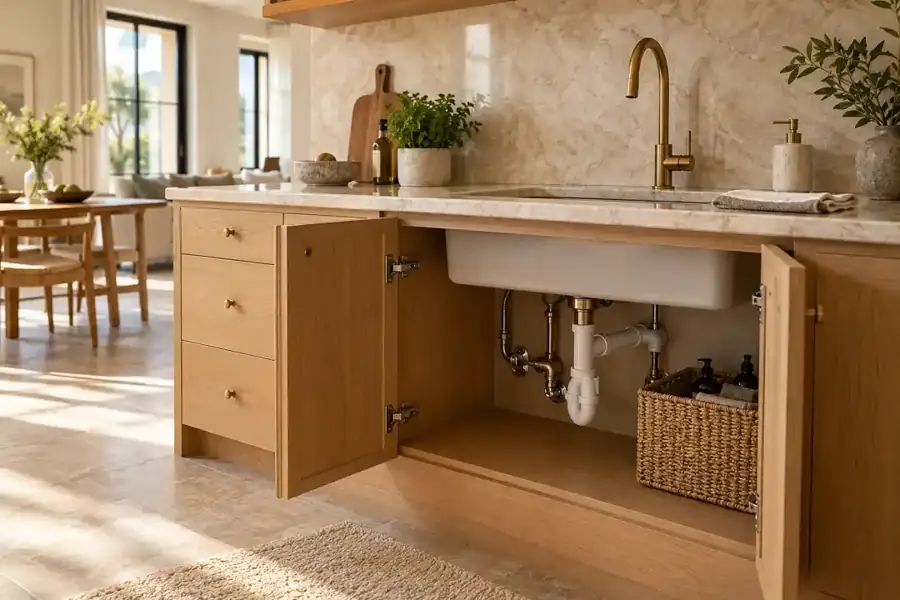
Choose rental bathroom improvements your team can maintain
Before buying, ask the supplier for care instructions, installation requirements and spare-part availability. A finish that needs special treatment may be a poor fit for frequent turnovers. Compare the total upkeep as well as the purchase price: cleaning time, compatible products, repair access and replacement effort all matter.
Use samples where practical. Ask the cleaning team whether they can maintain the proposed surface using its instructions. Avoid assuming that a material is suitable for wet areas because of its appearance. Flooring, shower equipment and any supporting fixtures need an appropriate specification and competent installation.
Keep the visual language restrained. A consistent cream-and-sage palette with a few well-chosen details can feel calm without crowding the room. Let the functional improvements lead the styling, especially where space is limited.
Write a clear work brief and protect bookings
List the faults to resolve, the items to add and the checks required before reopening. Include removal of old fittings, waste handling, protection of nearby rooms and responsibility for final cleaning. Confirm permissions and the contractor’s access arrangements before committing to the work.
Leave time for completion checks
Do not schedule a guest arrival against an optimistic finish estimate. Ask about installation and curing requirements for the actual products, allow time for cleaning and testing, and keep the booking calendar consistent with confirmed availability. Discuss any impact on existing reservations through the relevant booking channel.
Take a simple before-and-after record focused on the problem solved. “Two separate towel positions added” is more useful than “bathroom upgraded.” Test the completed room as a guest again and record anything that still needs attention.
Keep the improvement working after the first stay
Add the new fittings to the turnover checks. Look for loose hardware, damaged surfaces, depleted supplies and changes in drainage or ventilation. Use the guest-ready cleaning checklist to connect presentation with a repeatable inspection.
Review actual guest feedback and the team’s observations after several stays. Did the new shelf solve the storage problem? Are towels easier to dry? Is cleaning simpler? These questions support the next decision without assuming that a refresh guarantees higher rates or more bookings.
Questions before you spend
Does every refresh need a renovation?
No. Start with observed friction. Repairs, storage and clearer controls may be the right first step; larger work needs its own scope and assessment.
What should the owner approve?
The scope, costs, access, booking impact and reopening checks. For help prioritising rental bathroom improvements, discuss your property’s practical needs with Le Ciel. Confirm the suitable services and arrangements for your particular property.

