
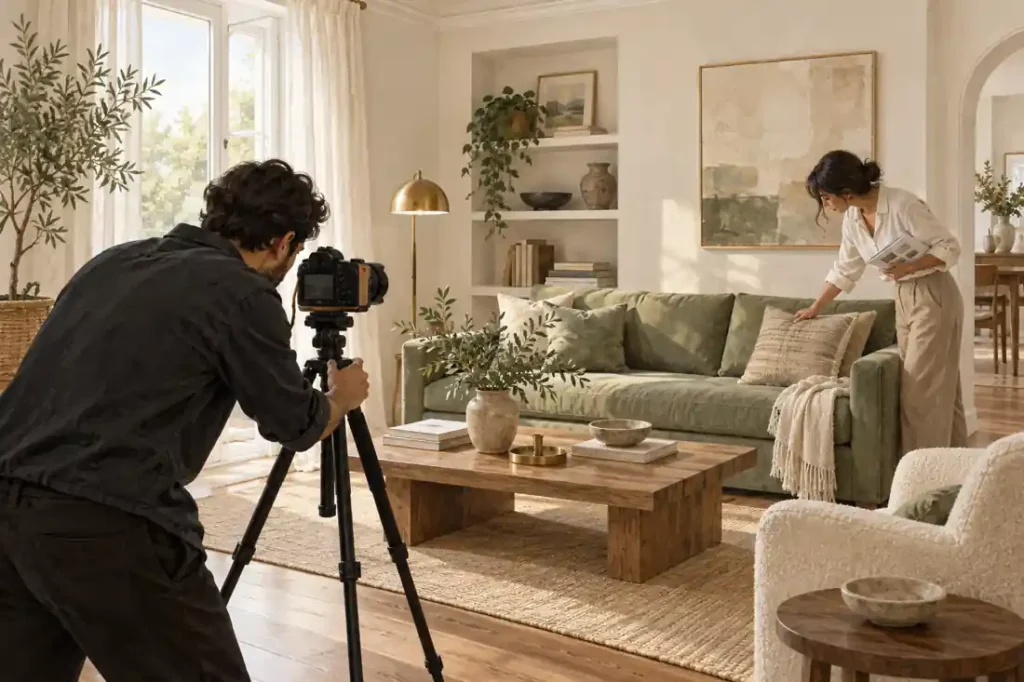
A property photo shoot should capture the stay a guest can actually expect, not a room that existed for one carefully styled hour. The most useful preparation therefore happens before the photographer arrives: repairs are finished, amenities are in their real positions, and every room is ready to be shown honestly.
Good preparation also protects the owner’s investment in the session. A photographer can refine angles and light, but should not have to wait for beds to be made, cords to be hidden, or a leaking tap to be discussed. Give the team a clear brief, a calm property and enough time to work methodically.
Finish operational work before styling the frame
Walk through the property several days before the shoot. Begin with anything that affects the stay: loose handles, stained grout, damaged lampshades, missing bulbs, unreliable appliances and unfinished paintwork. Add each item to a dated list with an owner, a deadline and a final check.
Use the rental property maintenance checklist to separate defects from cosmetic preferences. If a repair cannot be completed safely before the session, decide whether the room should be excluded and rescheduled. Do not photograph a facility as available when it will not be offered to guests.
Clean for the camera and for the next turnover
Photography reveals dust on dark surfaces, marks on mirrors and wrinkles that everyday eyesight may overlook. Clean the property to the same repeatable standard promised to guests, then inspect it in daylight. The vacation rental cleaning checklist can help the team cover high-touch areas without creating a one-off showpiece that operations cannot maintain.
Remove waste, laundry bags, cleaning bottles and personal paperwork. Store owner items securely rather than pushing them just outside the camera angle. Photographs should not conceal clutter that a guest will encounter on arrival.
Prepare a room-by-room shot brief
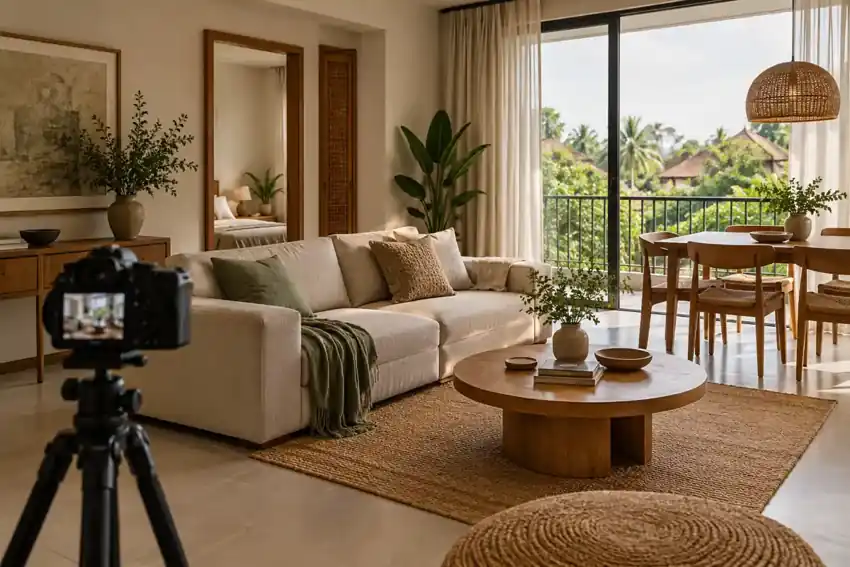
A short brief prevents the session from becoming a collection of attractive but disconnected images. List every bookable bedroom, bathroom, shared space, outdoor area and practical arrival feature. Beside each one, note the detail that helps a guest make a decision.
- Bedrooms: bed size, usable storage, bedside lighting and the real walking space.
- Bathrooms: shower or bath, towel placement, storage and any step or threshold.
- Kitchen: cooking equipment that will remain available, dining capacity and work surfaces.
- Living areas: seating capacity, work space and the relationship between rooms.
- Arrival: entrance, access route, parking arrangement and stairs where appropriate.
Avoid vague requests such as “make it look bigger.” Ask instead for clear compositions that show proportion and circulation. Airbnb’s current professional photography guidance says its photographers avoid fish-eye or super-wide lenses, unusual standing angles and heavy processing that could distort expectations. Even when using another photographer, that principle is a useful briefing point.
Agree what must not appear
Identify private documents, faces, vehicle plates, security codes, keys, medicines, family photographs and valuable objects before the crew arrives. Remove them physically; do not rely on cropping later. If staff or models might appear, agree consent and usage in writing. For most rental listings, a well-prepared empty room communicates the property clearly without manufacturing a lifestyle scene.
Style with restraint and operational truth
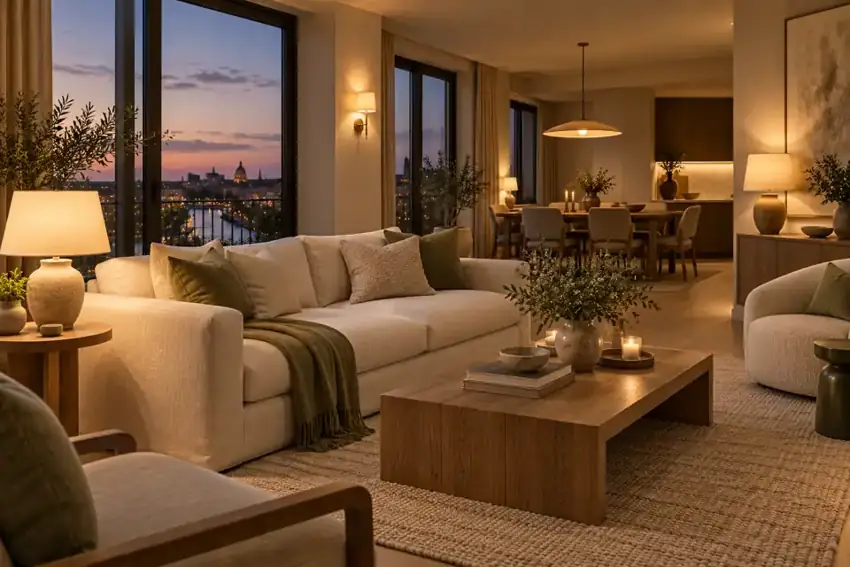
Open curtains, align chairs, smooth bed linen and place towels as the team will normally present them. A modest branch, a book or a tray can add warmth, but decoration should not occupy the surfaces guests need. Do not add borrowed equipment or consumables merely for the photograph.
The photographer needs to know which lighting works, where curtains can be moved and which furniture must remain in place. Keep spare bulbs, batteries and simple styling supplies nearby. Ask the stylist to return every operational item to its documented position when the session ends.
Let daylight shape the timetable
Discuss the property’s orientation and the best order for rooms with the photographer. Natural light changes quickly, and exterior spaces may need a different window from interiors. Airbnb’s photo-shoot preparation checklist recommends opening blinds and curtains, clearing surfaces and preparing bedding and bathrooms before the professional arrives.
This is platform-specific guidance, not a universal service promise. Confirm the photographer’s scope, equipment, delivery format, usage rights, turnaround and weather plan directly. If images will be used across rental channels, advertising or property-sale materials, obtain written permission for those intended uses.
Protect the calendar and the guest experience
Block enough time for final cleaning, photography, reinstating the rooms and a post-shoot inspection. Do not squeeze a session between checkout and the next arrival unless the full sequence has a realistic buffer. Existing reservations should not be disrupted for a non-urgent photo shoot.
Create a simple access plan: who opens the property, who answers questions, who approves small styling changes and who confirms the property is secure at the end. Record keys and access devices handed over. The owner or manager should remain reachable without crowding the photographer.
Run a final readiness check
- Repairs finished and tested; all promised amenities present.
- Cleaning completed, with mirrors, windows and reflective surfaces checked.
- Bed and towel presentation matches normal operations.
- Private and security-sensitive items removed.
- Shot brief, access plan and contact names shared.
- Usage rights, file delivery and rescheduling terms confirmed.
- Time reserved to reset and inspect the property after the session.
Review accuracy before publishing
When the files arrive, check more than colour and sharpness. Confirm that every photograph belongs to the correct room, shows current furniture and reflects facilities that guests can use. Remove near-duplicates, arrange the sequence around the guest journey and write literal alt text describing what is visible.
Update the gallery whenever a material feature changes. Strong photography supports trust only when the property continues to match it. It cannot guarantee bookings, rates or search position, and it should never replace an accurate description.
A practical next step with Le Ciel
Owners considering professional photography can prepare a room list, current maintenance notes and the intended uses for the images. Le Ciel can then discuss the property’s readiness and any suitable support individually. The useful first question is not “How luxurious can this look?” but “What does a guest need to understand before choosing this stay?”

