
LE CIEL JOURNAL · FOR PROPERTY OWNERS
The room looks beautiful. The lights are low, the sheets feel fresh, and the guest finally puts their phone away. Then the mattress dips in the middle. In that moment, the photograph stops mattering.
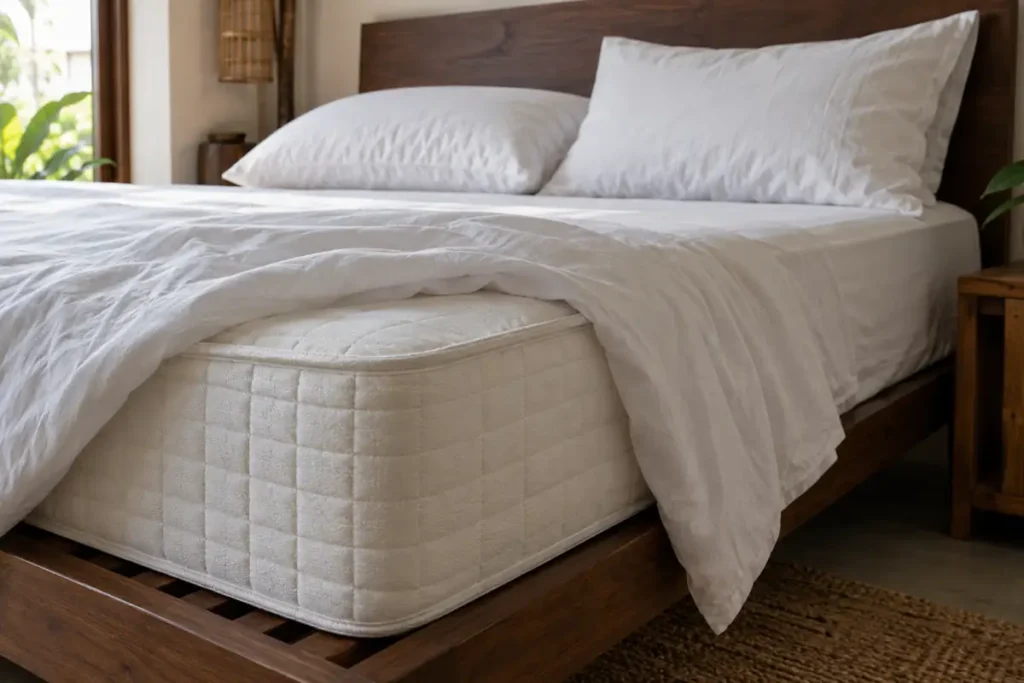
Choosing a vacation rental mattress deserves the same care as choosing the room’s furniture. Yet a comfortable bed is a whole system: a sound base, suitable mattress, supportive pillows, clean protection and bedding that feels pleasant in the room’s actual conditions. Start there before buying another decorative cushion.
Start beneath the sheets
First, inspect the bed with the linen removed. Look for loose joints, damaged slats, uneven support and any signs of moisture. Check the mattress manufacturer’s requirements for the base. A mattress that sits on the wrong support can feel different from the one you tested.
Test the bed as a guest would
Sit on each edge, lie in the centre and change position. Then ask a second adult to try the other side. Notice movement, noise and whether both sleepers roll towards the middle. This practical check helps separate a frame problem from a mattress problem.
Record the finding, not just “bed checked”
For example: “Right rear joint moves when someone sits down; maintenance required before arrival.” Add a photo and assign responsibility. Clear notes make the next inspection useful. Our vacation rental cleaning checklist can sit alongside this bedroom check.
Choose a vacation rental mattress for the room
There is no single firmness that every guest will love. Instead, choose a well-supported option that suits the bed size, expected use and your ability to maintain it. Test alternatives in person where possible, and compare the whole specification rather than relying on words such as premium or orthopaedic.
Measure the usable sleeping space
Measure the mattress itself, the base and the access route before ordering. In particular, confirm that a delivery team can negotiate the lift, stairs and bedroom doorway. Keep comfortable access beside the bed rather than squeezing in a larger size that blocks movement.
Ask practical questions before buying
- What base does this mattress require?
- Can the cover be removed, and how should it be cleaned?
- What does the supplier say about rotation or turning?
- What are the written warranty exclusions and delivery terms?
- Can you obtain the same size and specification for another room later?
Keep those answers with the purchase record. Follow the product’s care instructions, since some mattresses can be rotated but should not be flipped. Avoid inventing a universal replacement date: condition, use and manufacturer guidance should shape the decision.
Pillows: offer a useful choice
A mountain of decorative cushions can make a bed harder to use. A small, clearly managed choice of sleeping pillows is more helpful. For example, provide different levels of loft or feel if your cleaning and storage routines can support that choice.
Make spare pillows genuinely ready
Store clean spares in a dry, protected place. Use washable protectors where suitable, and check the care label before laundering. Replace pillows that remain lumpy, stained or unpleasant after the recommended care. Do not call a pillow allergy-free or hypoallergenic unless the specific product supports that claim.
For guests, describe what you actually provide. “Two sleeping pillows per guest, with spare pillows available on request” is useful only if your team can reliably fulfil it. Otherwise, state the arrangement accurately and invite questions before booking.

Protect comfort without adding heat and noise
A protector should help the team maintain the mattress while preserving its feel. Test it with the fitted sheet in place. Listen for rustling and check whether it slips, bunches or changes the surface noticeably. Waterproof protection and breathability are product characteristics to verify, rather than promises to assume.
Build a complete bedding trial
Before ordering for every bedroom, test one complete set: mattress, protector, fitted sheet, pillows and cover. Then ask the housekeeping team to strip and remake it. A difficult fit can slow every changeover, while a sheet that repeatedly pulls free becomes a guest complaint.
Describe sleep comfort honestly
Your listing should give guests facts they can use: bed dimensions, the number of beds, bedroom layout and any known limitations. Avoid “the best sleep of your life.” Even an excellent vacation rental mattress cannot guarantee how someone will sleep.
Likewise, do not photograph a different bed size or imply that a styling image shows the actual room. Read our guide to honest rental listing descriptions when updating your bedroom details.
A bedroom check before the next arrival
- Check frame stability and mattress condition.
- Inspect protectors and pillows, including spare stock.
- Confirm sheets fit neatly and feel fully dry.
- Test bedside lighting and access on both sides.
- Update the maintenance record and resolve defects before welcoming guests.
Finally, read feedback for patterns. One preference is not proof of a defective mattress. However, repeated comments about sagging, noise or a loose frame deserve a prompt inspection.
Should every bedroom use the same mattress?
Consistency can simplify purchasing and spare stock. However, different bed sizes or room constraints may require another specification. Document each room’s arrangement so the team gives accurate answers.
Can a topper rescue a worn mattress?
A topper may change the surface feel, but it does not repair a failed base or structural sagging. Find the cause before adding another layer.
A welcoming bedroom begins with care that guests can feel. Explore Le Ciel’s property management services if you would like to discuss the practical details behind a guest-ready home.

