
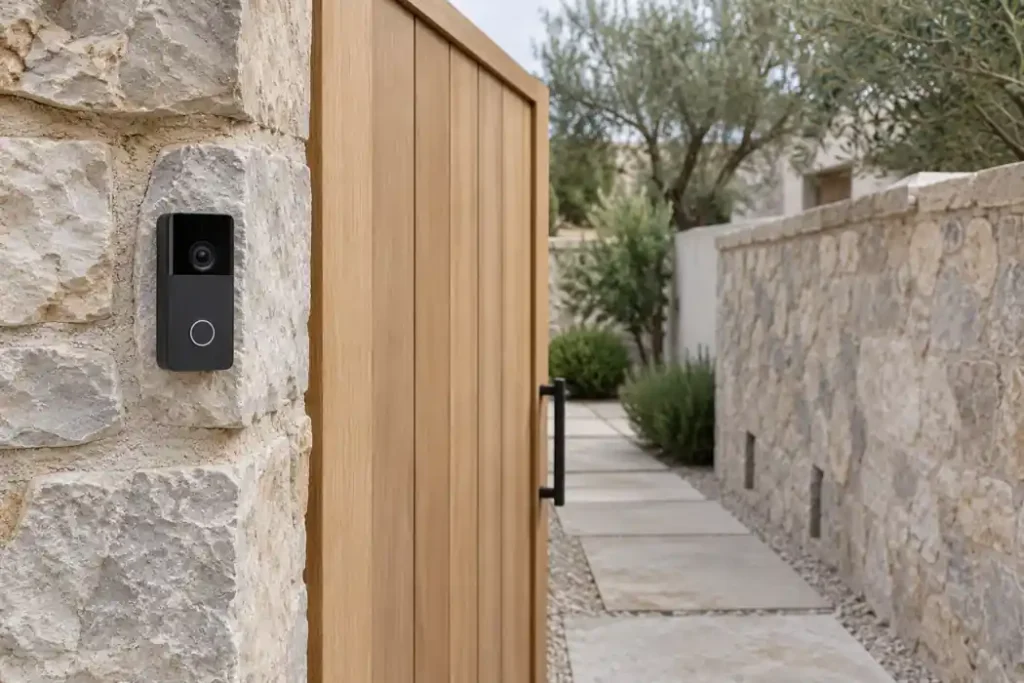
A guest should be able to close the door and settle into a private stay. Owners also need a sensible way to protect the property and respond when something goes wrong. Guest privacy and security work best when each device has a clear purpose, a permitted location and someone responsible for the information it creates.
Start with the problem you need to solve. A better entrance light, maintained lock or clear help contact may answer it without collecting more information. Adding technology creates work as well as convenience: someone must check the settings, explain the device and manage access to its records.
Begin guest privacy and security with a device inventory
Walk through the entrance, shared approaches and guest spaces. List cameras, doorbells, noise sensors, smart locks, televisions and connected controls. Include equipment left by a previous manager and features inside ordinary-looking devices. Ask a competent technician when you cannot establish what a device captures or transmits.
Write down the purpose and the person responsible
For each item, record its location, function, account owner, power source and any stored data. Ask whether it records images, sound, access events or account details. A vague label such as “security system” will not help the team answer a guest’s specific question.
Remove unnecessary equipment through an appropriate process and confirm the result. Do not disable smoke alarms or other required safety equipment as part of a privacy reset. Keep safety maintenance and optional connected features clearly identified.
Check channel rules before choosing a location
Airbnb’s policy for devices in homes prohibits indoor security cameras and recording devices, including disconnected ones, and bans hidden cameras. Permitted exterior devices require disclosed locations and must avoid private areas. Disclosed indoor decibel monitors cannot be in bedrooms, bathrooms or sleeping areas and must not record audio.
Review the actual view and function
Vrbo’s surveillance policy also prohibits surveillance inside the rental, including an outside camera pointing inward. Its outdoor-camera rules require access-point monitoring and disclosure of location and coverage. Smart devices must be disclosed before booking and guests must have an option to turn them off.
Review each channel separately; these are policy examples checked on 31 October 2026, not a complete legal assessment. Ask the installer to verify the real field of view. Consider an open door, a window, neighbouring property and any place where people expect privacy. Choose a narrower permitted view or a less intrusive solution when appropriate.
Make disclosure useful before a guest books
Use the channel’s required fields and clear listing text. Explain the device type, location, monitored area and relevant function accurately. Keep the welcome information consistent with that disclosure. A photograph of equipment is not a substitute for a clear explanation.
Use facts that the team can verify
For example, a statement about a doorbell monitoring an entrance should match the actual device and view. Do not say “no audio” unless the equipment and configuration support that claim. Our guide to honest rental listing descriptions offers a practical way to keep important limits close to the relevant feature.
Tell guests how to ask questions and explain any optional feature they can switch off. Give staff a shared, accurate answer. Avoid describing a system as completely secure or promising that a device will prevent every incident.
Limit who can see recordings and operational records
Use named accounts where available, grant only the access needed for each role and use supported account-security features. Review permissions when a contractor finishes or a manager changes. Avoid shared passwords in informal group chats and keep account recovery under an agreed responsible person’s control.
Choose retention deliberately
Identify which information the operation needs and why. Set retention and deletion arrangements with appropriate advice, taking account of applicable duties and any specific incident. Do not invent a universal number of days for every recording or guest record. Include cloud copies, downloaded files and supplier access in that review.
Indonesia’s Personal Data Protection Law, Law 27 of 2022, is an official starting point for discussing local obligations. Ask a qualified adviser how current requirements apply to your actual processing and suppliers. A platform disclosure alone is not a complete data-protection process.
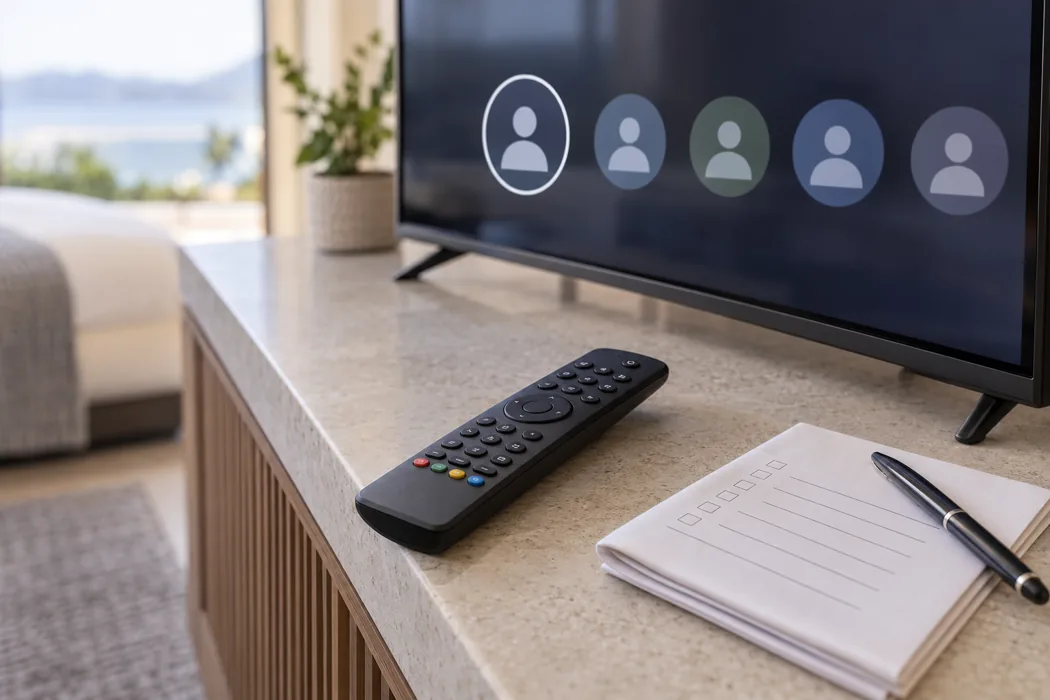
Reset shared devices between stays
Give guests a clear way to sign out of entertainment accounts and remove personal connections. Then include a check in the changeover routine: confirm that previous accounts, casting sessions and unnecessary personal history are no longer available. Follow the manufacturer’s instructions rather than assuming that switching a screen off clears its data.
Test the guest experience after the reset
Check that the television or control still works without the owner’s personal account exposed. Explain any supported guest mode and optional connected features. Do not browse a departing guest’s personal content while carrying out the reset. Escalate an unclear account issue to the responsible person.
Respond calmly to a privacy concern
Take the report seriously and establish what the guest has found. Explain verified facts, arrange any necessary inspection with permission and use the booking channel’s current reporting process where relevant. A remote alert is not automatic permission to enter an occupied home. Address an immediate emergency through the appropriate local response.
Keep records factual, share relevant material only with authorised people and avoid circulating guest images to illustrate an internal conversation. Review the device and disclosure after a change, complaint or handover. Discuss your property’s operating arrangements with Le Ciel to clarify responsibilities individually. Thoughtful guest privacy and security should make a stay feel cared for, with boundaries that everyone can understand.

