
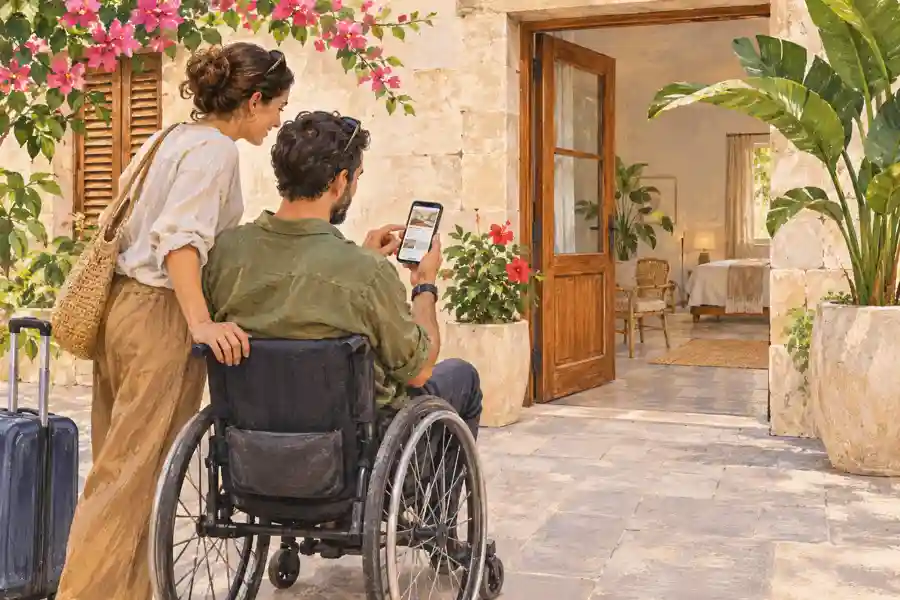
The pleasure of a trip often begins with an ordinary moment: arriving together, setting down a bag and knowing the room will work for you. When booking with accessibility needs, a reassuring label is only a starting point. Specific answers leave more room for the visit itself.
Access needs differ. A wheelchair user, someone who finds stairs tiring, and a guest who needs written communication may ask different questions. Start with what you need to do comfortably, then ask the host to describe the actual property. You decide whether the confirmed details fit your stay.
Before booking with accessibility needs, define your essentials
Make a short list of non-negotiable features, useful adjustments and optional comforts. Think through arriving, entering, sleeping, washing and leaving. Describe the feature you need rather than sending a diagnosis or a detailed medical history. Share only the personal information necessary to arrange the stay.
Turn a general wish into a clear question
Instead of asking whether the apartment is “suitable for everyone,” ask whether there is a continuous route without steps from the drop-off point to the bedroom. If you use mobility equipment, compare measured clearances with your own requirements. A photograph helps explain a layout, but perspective alone cannot establish a dimension.
Check the whole journey from vehicle to room
An apartment can have a lift and still have steps before the lobby. Ask about the drop-off surface, kerbs, gates, entrance threshold and corridors. Find out whether the route changes after hours, in rain or when a side gate is locked. Ask for current photographs along the route, including any obstacles.
A lift needs more than a yes or no
Confirm which floors it serves, its door opening and internal dimensions if relevant to your equipment. Ask whether access requires a key or staff assistance. Also ask what the building does when the lift is unavailable. A backup arrangement needs a specific explanation; do not assume someone will carry you or your equipment.
Airbnb provides search filters and listing information for particular accessibility features. Those can help narrow a search, but contact the host when an essential detail is absent. A platform feature label does not answer every question about your route.
Ask how the bedroom and bathroom actually work
Request photos showing the approach to the bed, the usable space beside it and any fixed furniture that narrows the route. Ask about bed height if it affects transfers. Confirm that the room shown is the one you will receive, rather than another unit in the building.
Look beyond a photograph of the shower
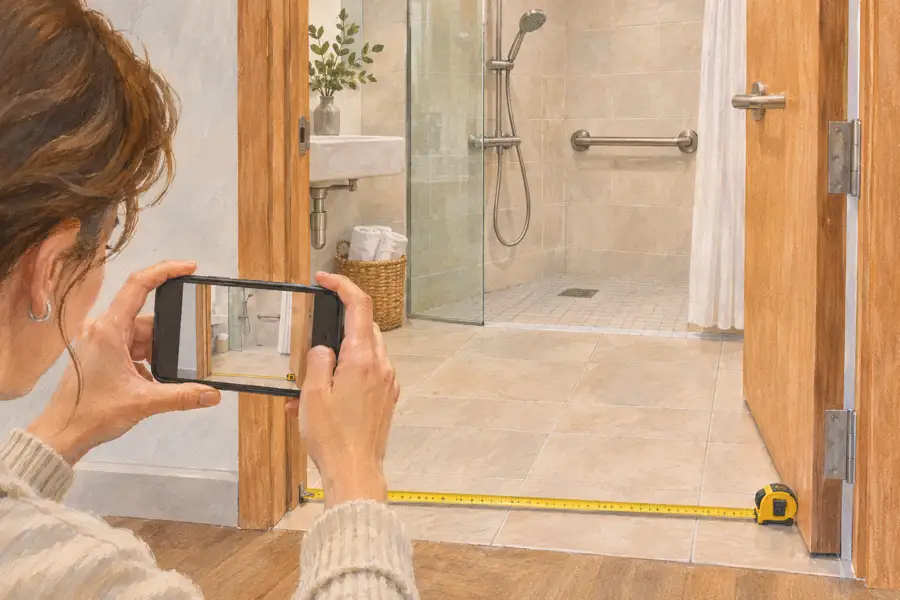
Ask about the bathroom doorway, thresholds, shower entrance and clear space around the toilet. If support rails or a shower seat matter to you, request their location, type and current photographs. Do not treat a towel rail or an ordinary chair as equivalent equipment. Ask the host to confirm the suitability and condition of any supplied aid.
Airbnb’s accessibility photography guidance recommends clear views and measurement photos. Use that idea in your own enquiry: ask for one wider view to show the setting and one close view of the relevant measurement. No single doorway width establishes that an entire property will meet your needs.
Include communication, sensory comfort and daily routines
Accessibility is wider than physical entry. If you need written arrival instructions, ask whether these can be supplied before travel. Discuss how the team will communicate an urgent message. Guests with hearing or vision needs should ask about the actual alert systems and instructions available, without assuming specialist equipment is installed.
For sensory comfort, ask about known noise sources, lighting controls and a quieter place to rest. Request descriptions rather than a promise of silence. Consider meals, storage and charging points too. If equipment needs power, confirm practical socket locations and discuss an appropriate backup plan with your equipment provider where needed.
Separate an adjustment from a promise
A host may be able to move a small table or place towels within reach. Ask who will arrange this and whether the agreed layout will remain for your visit. Structural changes, specialist equipment and personal assistance require separate confirmation. Do not book on the assumption that a request has been accepted.
Booking with accessibility needs: keep a written record
Read the property details, quote and cancellation terms together. Save the host’s answers through the booking channel and resolve any mismatch before committing. If a crucial feature remains unknown, ask for clarification or compare another option. Do not assume that an unmet preference automatically creates a right to a refund.
A message you can adapt
“We are considering [unit] for [dates]. We need [specific features]. Could you confirm the route from drop-off to the bedroom, the relevant doorway clearances and bathroom layout, with current photos? Please also confirm [adjustment] and the contact process if the lift or an essential feature is unavailable.”
For a longer visit, combine this access brief with our questions before renting for a month. Utilities, cleaning and support arrangements also shape an everyday routine.
Reconfirm essential details before arrival
Ask the host to tell you about changes to the route, furniture or equipment before you travel. Confirm the arrival contact and discuss the property’s emergency and evacuation arrangements with the host or building team. These should address your circumstances; a general assurance is not a personalised plan.
Ask Le Ciel to check a property against your access requirements, sharing dates, a listing link and the features that matter. Suitability, available adjustments and booking terms need individual confirmation. When booking with accessibility needs, clear answers help you choose a stay with confidence and enjoy the time you came to share.

